Eastern Caribbean · Cruise port guide
Frederiksted, St. Croix
The largest and least-visited US Virgin Island, with a pier at Frederiksted, Danish colonial towns and a pier dive site beneath the ship.
Port basics
Getting ashore
Ships dock
Berth to town
Frederiksted starts at the pier head — the waterfront and town are immediately there.
Time in port
Typically 7–9 hours
Cruise season
Calls year-round, less frequently than St. Thomas
Currency
US dollar
Language
English
Time zone
Atlantic Standard Time (UTC−4), no daylight saving
Nearest airport
Henry E. Rohlsen (STX) — About 15 km east, roughly 20 minutes
These are the patterns St. Croix normally operates on. Berth assignments, tender arrangements and time in port vary by ship, line and day, and we confirm the specifics for your sailing once we know the dates.
About St. Croix
St. Croix is the largest of the US Virgin Islands and sits about 60 km south of the others, on its own. It gets a fraction of St. Thomas’ cruise traffic, which is precisely its appeal — a group that has done the Eastern Caribbean before will find it markedly quieter.
The island was Danish until 1917 and has two well-preserved colonial towns. Frederiksted, where ships berth, is the smaller and sleepier of the two, with a yellow 18th-century fort at the waterfront. Christiansted, about 30 minutes east, is the larger: arcaded Danish buildings, a boardwalk and a National Historic Site.
The pier you arrive at is itself a notable dive and snorkel site. The pilings are covered in sponges and coral and attract seahorses, frogfish and octopus, and it is accessible directly from the adjacent beach. Very few cruise berths double as a dive site.
Buck Island Reef National Monument, off the east end, protects an elkhorn coral barrier reef with a marked underwater trail. It is reached by boat from Christiansted and takes most of a port call, but it is the strongest snorkelling day the US Virgin Islands offer.
Going ashore in St. Croix
Within reach on foot
- Frederiksted waterfront and Fort Frederik
- Strand Street’s Danish colonial buildings
- Rainbow Beach, about 2 km north
- The Frederiksted Pier itself, a well-known shore dive and snorkel site
What the port is known for
- Christiansted, the larger Danish town on the east coast
- Buck Island Reef National Monument and its underwater trail
- Cruzan Rum distillery
- St. George Village Botanical Garden, built on a sugar plantation site
How ships berth here
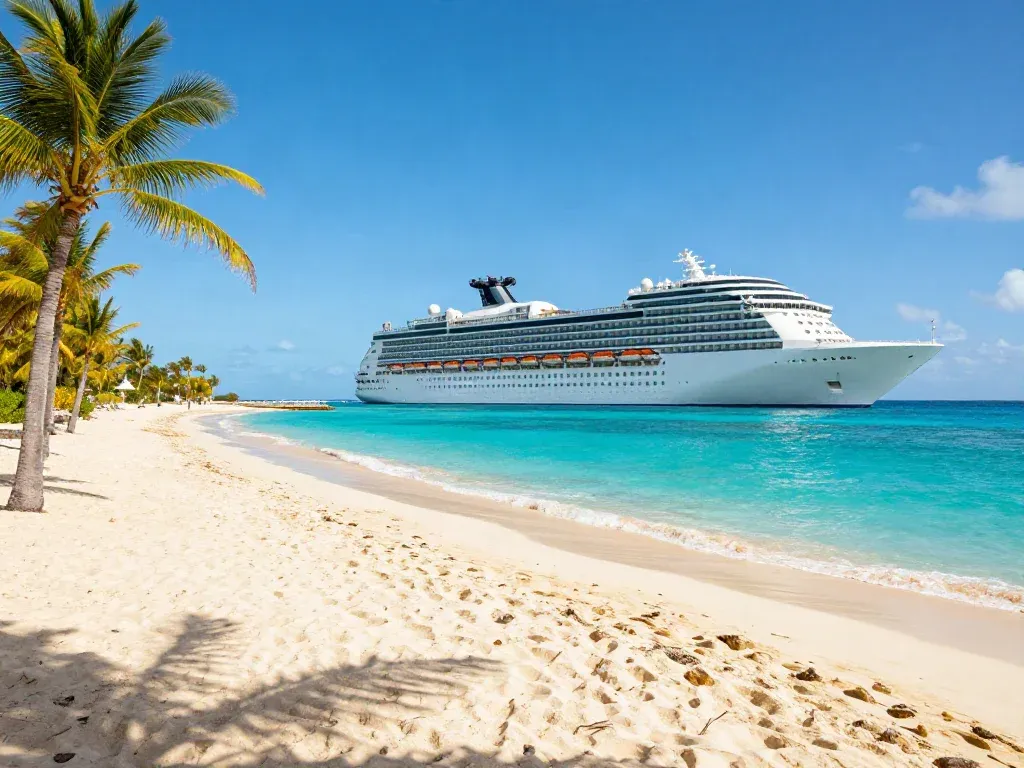
Ships berth at the Ann E. Abramson Pier at Frederiksted on the west coast. It is a walk-off berth leading straight onto the town waterfront.
Access and mobility
The pier and Frederiksted waterfront are flat and step-free. Christiansted’s boardwalk is accessible; the Buck Island trip requires boarding a small boat.
Weather and when ships call
Warm and drier than the northern Virgin Islands, 27–31°C. Driest February to April. Hurricane season June to November.
Cruise season
Calls year-round, less frequently than St. Thomas
Typical itinerary length
St. Croix usually appears on 7 nights Eastern Caribbean itineraries. Sails year-round.
Ports often paired with St. Croix
Itineraries that call here usually call at these too, so it is worth reading them together when you are comparing weeks.
St. Thomas
The busiest Eastern Caribbean call — a US territory with duty-free shopping, a harbour town of Danish colonial streets and no passport friction for Americans.
St. John
Two-thirds national park, reached by tender or by ferry from St. Thomas — the quietest and greenest of the US Virgin Islands.
San Juan
A 500-year-old walled Spanish colonial city that is also a US territory and a major homeport — you step off the ship into Old San Juan.
Explore further
Eastern Caribbean cruises
The Virgin Islands, Puerto Rico, St. Maarten and the northern Leewards — walkable towns and short tender-free port days.
Cruise ports in US Virgin Islands
Every US Virgin Islands port we cover, with seasons, berthing and shore access.
All cruise ports
Browse every port guide by region, country or name.
Bringing a group to St. Croix?
We hold five cabins or more together as a single block, quote it once, and let each household book and pay separately. Tell us roughly when and how many.