Adriatic · Cruise port guide
Split, Croatia
A city built inside a Roman emperor’s retirement palace, with the berth a few minutes’ walk from its walls.
Port basics
Getting ashore
Ships dock
Berth to town
Diocletian’s Palace is about 500 m from the berth — under 10 minutes on foot.
Time in port
Typically 8–10 hours
Cruise season
Calls April to October
Currency
Euro — Croatia adopted the euro in January 2023
Language
Croatian; English very widely spoken
Time zone
Central European Time (UTC+1, UTC+2 in summer)
Nearest airport
Split (SPU) — About 25 km northwest, 30 minutes
These are the patterns Split normally operates on. Berth assignments, tender arrangements and time in port vary by ship, line and day, and we confirm the specifics for your sailing once we know the dates.
About Split
Diocletian built his retirement palace here around AD 305, and when the nearby city of Salona was abandoned in the 7th century, refugees moved inside the walls and never left. The result is unique: a Roman palace that is not a ruin but a functioning town centre, with apartments, bars and shops built into and on top of the imperial structure.
The Peristyle, the colonnaded courtyard at the heart of it, still works as a public square, and the cathedral beside it was Diocletian’s own mausoleum — a strange afterlife for an emperor remembered for persecuting Christians.
Split is the easier of the two Croatian ports for a group. The berth is a few minutes from the palace, the old town is compact and largely level, and the shaded lanes make midday manageable in a way Dubrovnik’s open walls do not.
Trogir, 27 km along the coast, is the natural half-day addition: a small walled town on its own island, also UNESCO-listed, and considerably quieter than either Split or Dubrovnik.
Going ashore in Split
Within reach on foot
- Diocletian’s Palace, with the modern town built inside it
- The Peristyle, the palace’s colonnaded courtyard
- The Cathedral of St Domnius, once Diocletian’s mausoleum
- The Riva waterfront promenade, at the berth
What the port is known for
- Trogir, a walled UNESCO town about 27 km northwest
- Krka National Park and its waterfalls, about 80 km
- Hvar island by fast ferry
- Salona, the Roman provincial capital just inland
How ships berth here
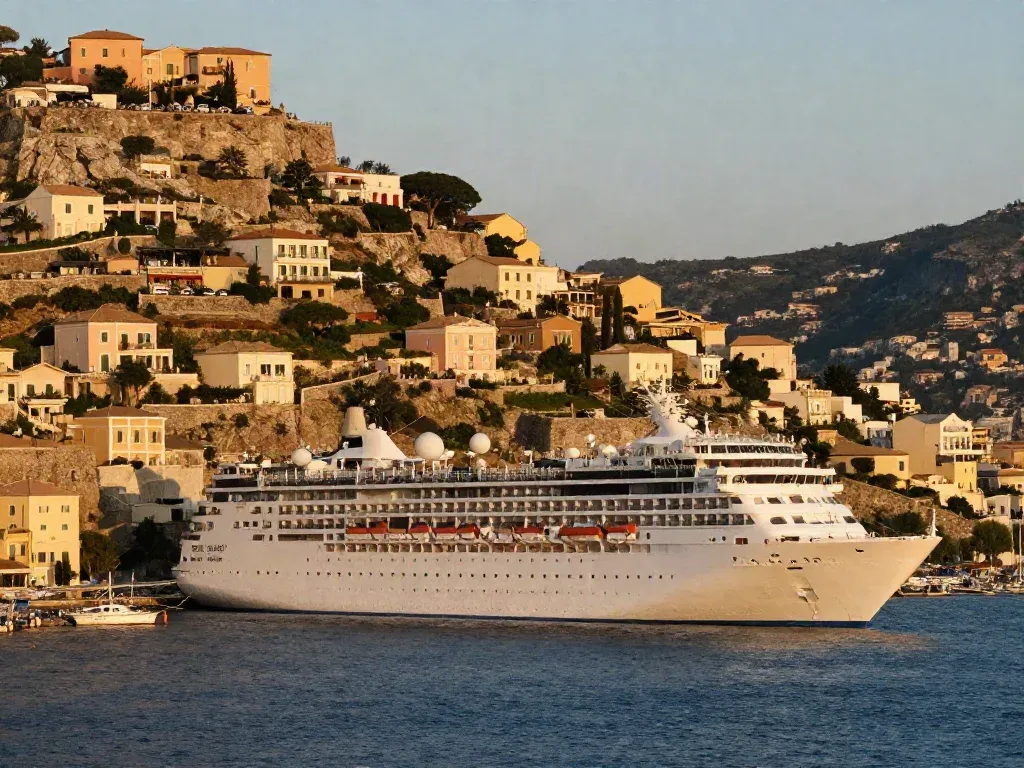
Ships berth in the city harbour immediately southeast of the old town. Larger vessels occasionally anchor and tender. It is among the best-placed berths in the Adriatic.
Access and mobility
The Riva and the palace’s main level are largely flat, though the paving is polished stone and slippery when wet. The cellars are reached by steps, and the bell tower is a steep narrow climb.
Weather and when ships call
Hot and dry, 29–32°C in July and August. The palace’s stone lanes are narrow and shaded, which makes Split more bearable at midday than Dubrovnik’s exposed walls.
Cruise season
Calls April to October
Typical itinerary length
Split usually appears on 7 nights Adriatic itineraries. April – October.
Ports often paired with Split
Itineraries that call here usually call at these too, so it is worth reading them together when you are comparing weeks.
Dubrovnik
A walled city on the Dalmatian coast with a complete circuit of medieval ramparts, berthed at Gruž about 2.5 km from the gates.
Kotor
A fortified town at the head of a deep winding bay, with the berth directly beneath the walls and a fortress climb above it.
Venice
Still on Adriatic itineraries, but no longer a berth in the city — large ships were barred from the historic basin in 2021 and now use the mainland.
Explore further
Adriatic cruises
Croatia, Montenegro and the Italian east coast — walled medieval towns, short sailing distances and fewer ships than the Western Mediterranean.
Cruise ports in Croatia
Every Croatia port we cover, with seasons, berthing and shore access.
All cruise ports
Browse every port guide by region, country or name.
Bringing a group to Split?
We hold five cabins or more together as a single block, quote it once, and let each household book and pay separately. Tell us roughly when and how many.