Western Mediterranean · Cruise port guide
Valletta, Malta
A fortified 16th-century capital built by the Knights of St John, entered through one of the great natural harbours of the Mediterranean.
Port basics
Getting ashore
Ships dock
Berth to town
The waterfront is at the berth. Valletta proper is about 60 metres straight up, by lift or a steep walk.
Time in port
Typically 8–11 hours, sometimes overnight
Cruise season
Calls year-round, busiest April to November
Currency
Euro
Language
Maltese and English are both official — English is universal
Time zone
Central European Time (UTC+1, UTC+2 in summer)
Nearest airport
Malta International (MLA) — About 8 km south, 20 minutes
These are the patterns Valletta normally operates on. Berth assignments, tender arrangements and time in port vary by ship, line and day, and we confirm the specifics for your sailing once we know the dates.
About Valletta
Valletta was built from nothing after 1565, when the Knights of St John survived a four-month Ottoman siege and decided the peninsula needed a proper fortified city. The whole capital is a UNESCO World Heritage Site and it is tiny — roughly 600 metres by 1,000 — so a group can see a great deal on foot in a few hours.
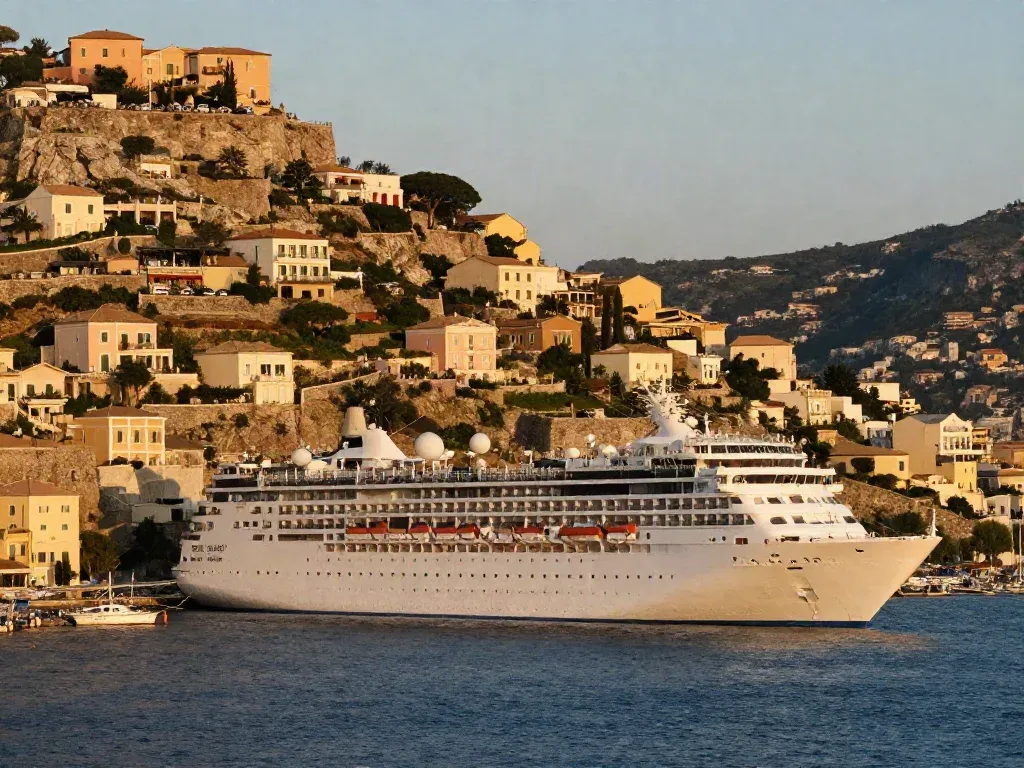
Sailing into the Grand Harbour is one of the best arrivals in the Mediterranean: a deep inlet flanked by limestone bastions, with the city rising directly above the water on both sides. It is worth being on deck for.
St John’s Co-Cathedral is plain outside and overwhelming within — every surface carved, painted or inlaid, with the floor made of some 400 marble tomb slabs. It also holds Caravaggio’s Beheading of Saint John the Baptist, his largest canvas and the only work he signed.
Malta is bilingual and English is an official language, a legacy of British rule until 1964. For an English-speaking group it is the easiest Mediterranean port to navigate independently — no phrasebook, familiar road signs, and plugs that take a UK three-pin.
Going ashore in Valletta
Within reach on foot
- St John’s Co-Cathedral, holding two Caravaggios
- The Upper Barrakka Gardens and the saluting battery
- The Grandmaster’s Palace and the armoury
- Republic Street and the restored Valletta Waterfront at the berth
What the port is known for
- Mdina, the walled former capital inland
- The Hypogeum, a prehistoric underground burial complex, on strictly limited daily tickets
- The Blue Grotto and the southern cliffs by boat
- Gozo, the quieter sister island, by ferry
How ships berth here
Ships berth along the Valletta Waterfront in the Grand Harbour, a restored row of 18th-century warehouses. The berth is at sea level and the city is on the ridge above — a barrakka lift covers the climb in seconds.
Access and mobility
The waterfront is flat, and the Barrakka lift removes the main climb into the city. Valletta itself is built on a grid over a ridge, so several streets are stepped. Mdina is largely level once inside the walls.
Weather and when ships call
Hot and very dry in summer, 30–34°C with almost no rain from June to September. Malta gets more sunshine than anywhere else in Europe, and shade in Valletta is limited to the narrow side streets.
Cruise season
Calls year-round, busiest April to November
Typical itinerary length
Valletta usually appears on 7 nights Western Mediterranean itineraries. April – November, busiest June to September.
Ports often paired with Valletta
Itineraries that call here usually call at these too, so it is worth reading them together when you are comparing weeks.
Palermo
Sicily’s capital, where Norman, Arab and Byzantine architecture sit in the same buildings, with a berth at the edge of the old city.
Naples
The rare Mediterranean port where the ship berths in the middle of the city, with Pompeii, Vesuvius and Capri all within reach of the day.
Palma de Mallorca
A Balearic capital under an enormous sandstone cathedral, with a walkable old town and beaches within a short ride of the berth.
Explore further
Western Mediterranean cruises
Spain, France and Italy in a single week, with a major city almost every morning and the shortest sailing distances in the Mediterranean.
Cruise ports in Malta
Every Malta port we cover, with seasons, berthing and shore access.
All cruise ports
Browse every port guide by region, country or name.
Bringing a group to Valletta?
We hold five cabins or more together as a single block, quote it once, and let each household book and pay separately. Tell us roughly when and how many.